

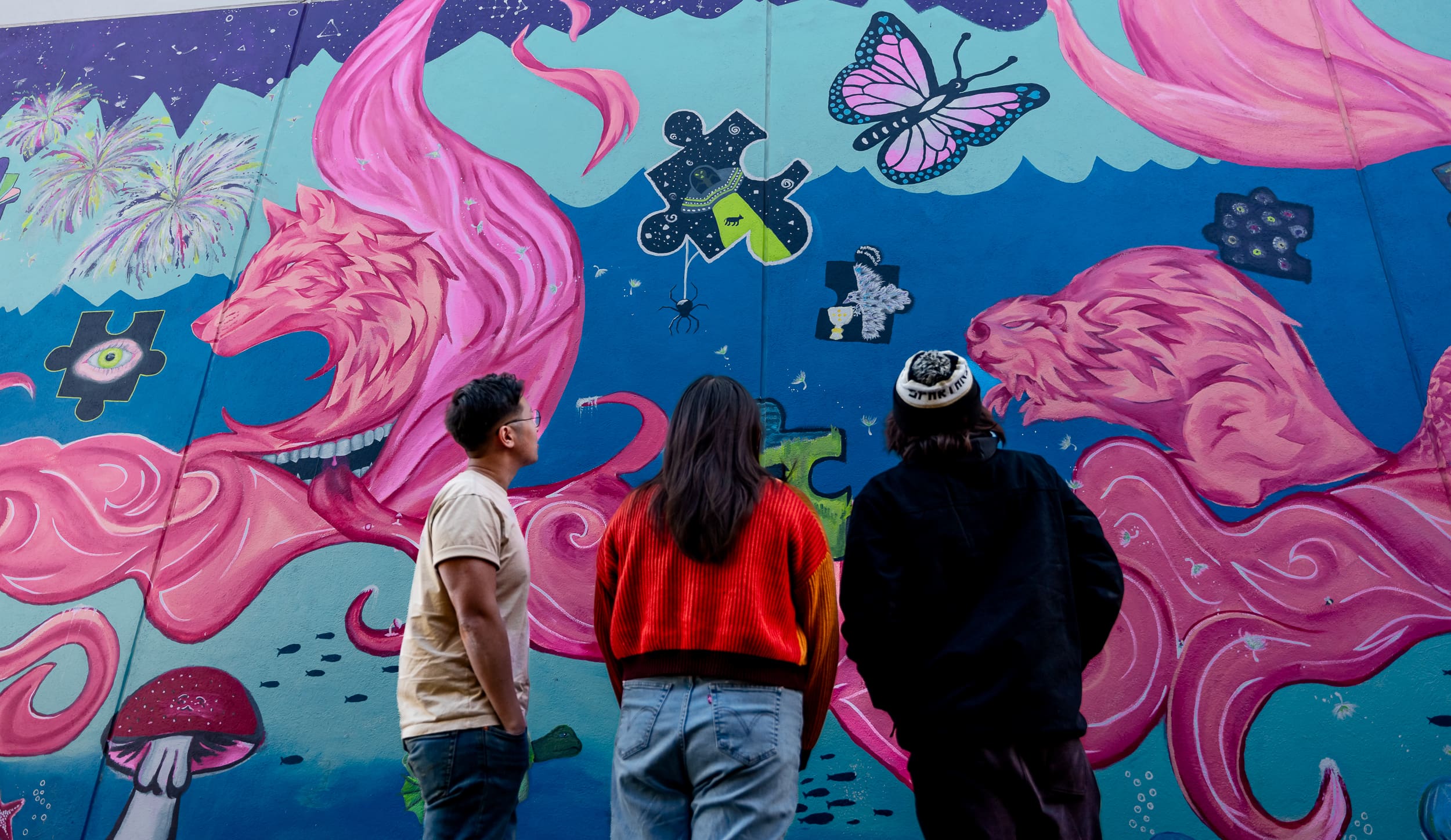
In the Dakelh language, the word ‘Lheidli’ means “where the two rivers flow together”, and ‘T’enneh’ means “the People”. While I am adopted into the Lheidli T’enneh culture and have lived on this territory (now colonially known as Prince George) my whole life, my roots are Tse’Khene, a word that roughly translates to “People of the Rocks.”
Both of these identities shape who I am.
And like the rivers that meet here, my identity is also a meeting place. I exist at the intersection of being Indigenous and gender queer. A combination you don’t come across too often in Prince George – a deeply conservative, predominantly white town – let alone find allyship or solidarity for.
Growing up here was challenging. My adoptive family did their best to provide belonging in a place that lacked community. However, they were also navigating a colonial system that wasn’t built to support them. I struggled to understand who I am, why I’m here. And my own anxieties and perceived expectations left me with an internal feeling of disconnection.
As a teenager, this manifested into anger at the world and the oppressive system in which we live. Mixed in with internalized racism that I just didn’t have the guidance to work through.
At 18, working as a carpenter was a great way to make money. But being a very male-dominated field, it wasn’t the best space for me to be in, and I wasn’t treated very well.
I was struggling with my mental health when I discovered Foundry, purely through word of mouth. When I finally built up the courage to walk into a Foundry centre , I was surprised to find that the peer support worker who greeted me was able to intuitively understand and share in a lot of what I had been grappling with my entire life.
We didn’t explicitly talk about being queer or Indigenous; it was just something that we both intrinsically knew of each other and of ourselves. There was an unspoken recognition between us, even though it didn’thave labels. That connection was powerful.
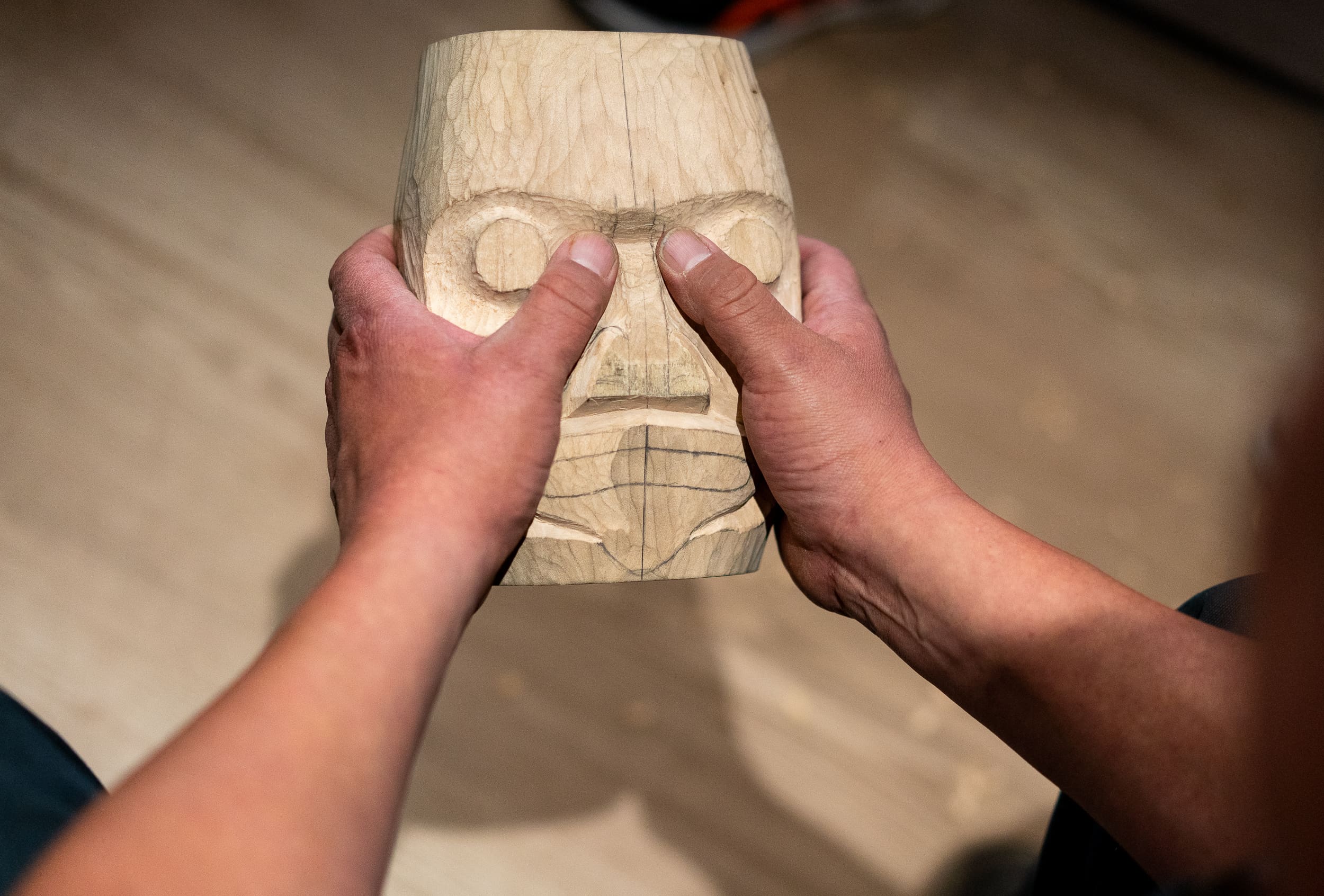
Back then, I didn’t have the words to know that I identified as queer. Foundry played a role in giving me that language and creating a safe space for me to explore my identity on my own terms, so I could figure out who I could be and who I want to be.
If my peer support worker didn’t share the same Indigenous-queer intersection, I may have never found the right words or safe space needed to begin my journey of self-transformation. Being able to connect with people at the centre who had similar lived experiences and diverse identities helped me feel safe enough to continue going back.
As someone who’s naturally shy and sensitive to power dynamics, having someone gently walk me through things made a big difference. The peer support worker made sure that I had autonomy when accessing services and choice in the care I was receiving – something I never had growing up.
I learned that sometimes it’s not about finding an answer right away. It’s about having the space to express yourself and having someone listen. It’s about being able to pour out all your worries and concerns and have someone hold that weight with you for a while.
That’s really the power of peer support.
They’re there to offer a listening ear and help you realize you’re not alone. That no matter how isolated or unique you may feel in your struggles, there are people out there who can understand what you’re going through and maybe even share the same living experiences as you.
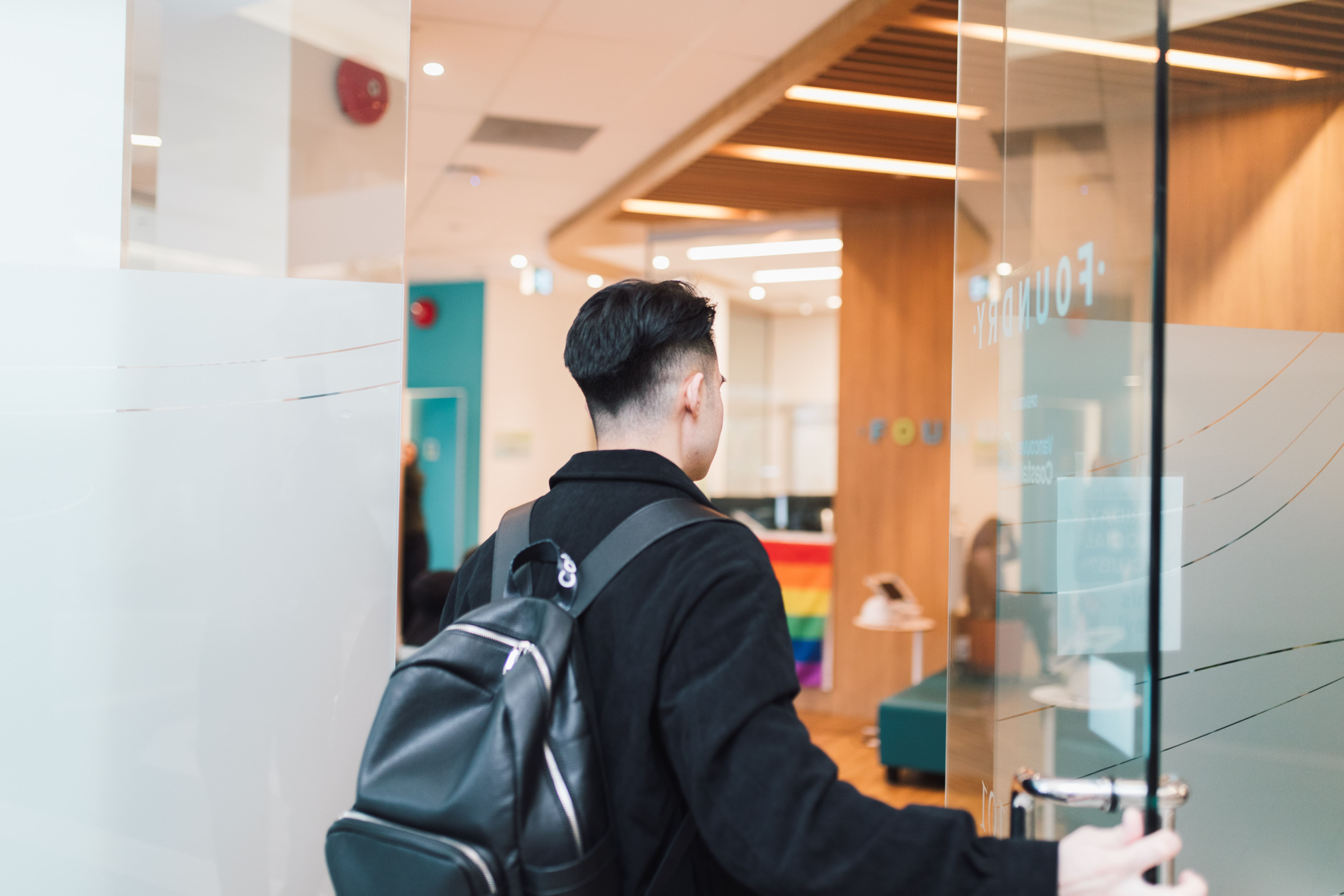
Now, at 24 years old, I work as a peer support worker at Foundry Prince George, supporting other youth who may be navigating complex health journeys.
My work involves everything from life skills and harm reduction to helping gender and sexually diverse clients change their name or ID. Sometimes I even go with them to appointments to be a supportive presence when accessing gender affirming care. In the summer, we host monthly movie nights so young people can connect in a relaxed, welcoming space.
As a gender queer person, I think I bring a different kind of energy to the room. Other gender diverse youth may not know how I identify right away, but they pick up on it. They recognize the space I’m creating is different and they gravitate toward it. That unspoken connection matters.
At Foundry we uplift marginalized voices and give young people autonomy. That’s something I take a lot of pride in being part of. Seeing a real impact in the lives of the youth I work with is the most rewarding part of this role.
There is so much heaviness in the world – politically, socially and economically – that it can feel like the world is on fire. But my mother always says there’s a time to panic and there comes a time you have to transform that panic into action.
I’m trying to create safety, connection, and empowerment for youth. And this is how I act in, in my own small way. Because when youth are healthy, they build healthy relationships. And healthy relationships build healthy communities and future generations.
Peer support workers are oftentimes the first face that young people see when they walk into a Foundry centre for support and they are usually other young adults with lived or living experiences navigating health journeys with overlapping complexities, like mental health, substance use, neurodiversity, and gender and sexuality. Data from the 2024 Youth Peer Support fiscal report shows that over 55 percent of youth self-referred to peer support services at Foundry. Peer support workers disrupt the power imbalance that traditionally forms between clients and their medical practitioners by grounding their approach in lived and living experiences, and they play a key role in supporting Foundry clients with navigating various services as well as creating safe spaces where youth can connect with other youth in a non-judgmental and low-barrier environment.
If you or someone you know is looking for support, you can access services at a Foundry centre or via Foundry Virtual BC. Learn more about these services or how you can support Foundry here.