What is Findings for Foundry?

What is Findings for Foundry?
Findings for Foundry is an initiative co-created with youth and family/caregivers that highlights research connected to the Foundry network—whether through youth, families, or service providers as authors, co-creators, or participants. Each edition breaks down key findings into a plain-language infographic, making research more accessible and relevant to those who support or are supported by Foundry services
Who is involved?
The Findings for Foundry Committee, a group of Provincial Youth and Family Advisors, codesigns each infographic with the Knowledge Exchange and Mobilization Team at Foundry based on research connected to the Foundry Network
To learn more about the initiative or how to get involved, please contact knowledge@foundrybc.ca. Learn more about Foundry Research at foundrybc.ca/research.
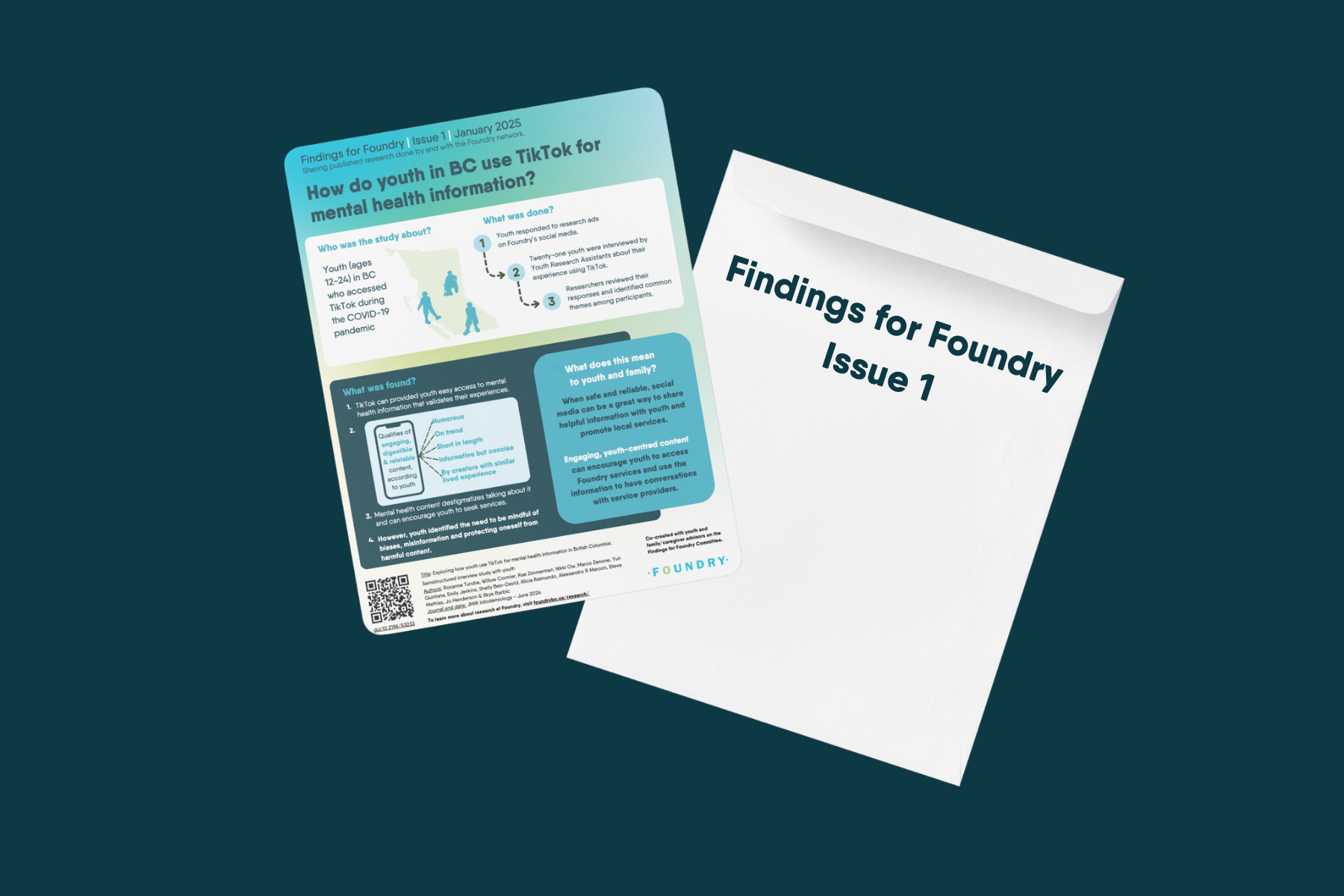
In this issue, youth and family/caregivers explored a study led by Turuba et al. (2024) about how young people in BC use TikTok to find mental health information. The study interviewed 21 youth about what makes content engaging, how TikTok can validate their experiences, and where risks like misinformation show up. This infographic highlights what youth told us about using social media for mental health, and how Foundry can support safer, more youth‑centred digital information sharing.
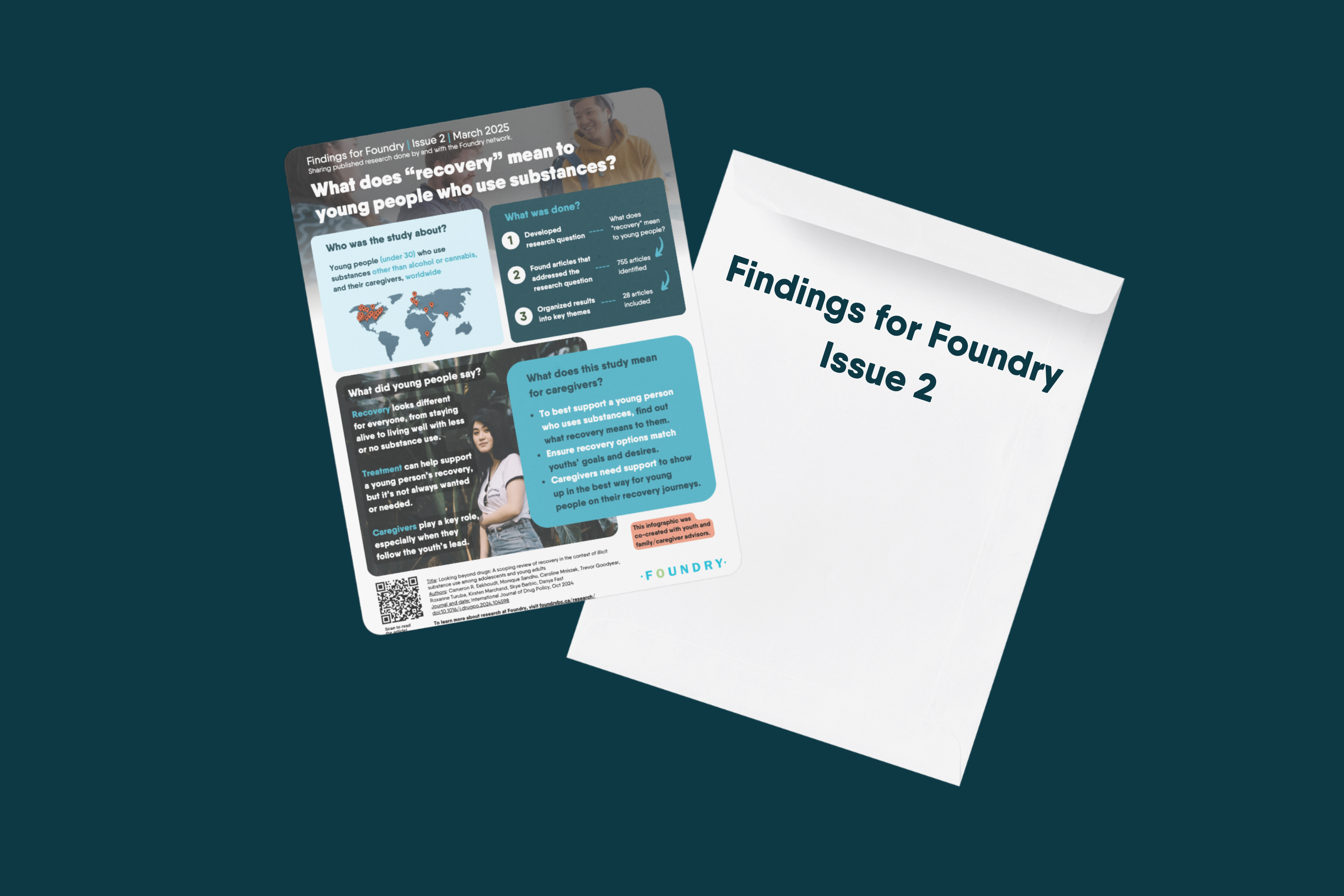
In this issue, youth and family/caregivers explored a study led by researchers across the Foundry network that examined what “recovery” means to young people who use substances. The review synthesized 28 articles to understand how youth define recovery, what supports matter, and how caregivers fit into the picture. This infographic highlights the key themes young people shared and what these insights mean for caregivers supporting youth on their recovery journeys.
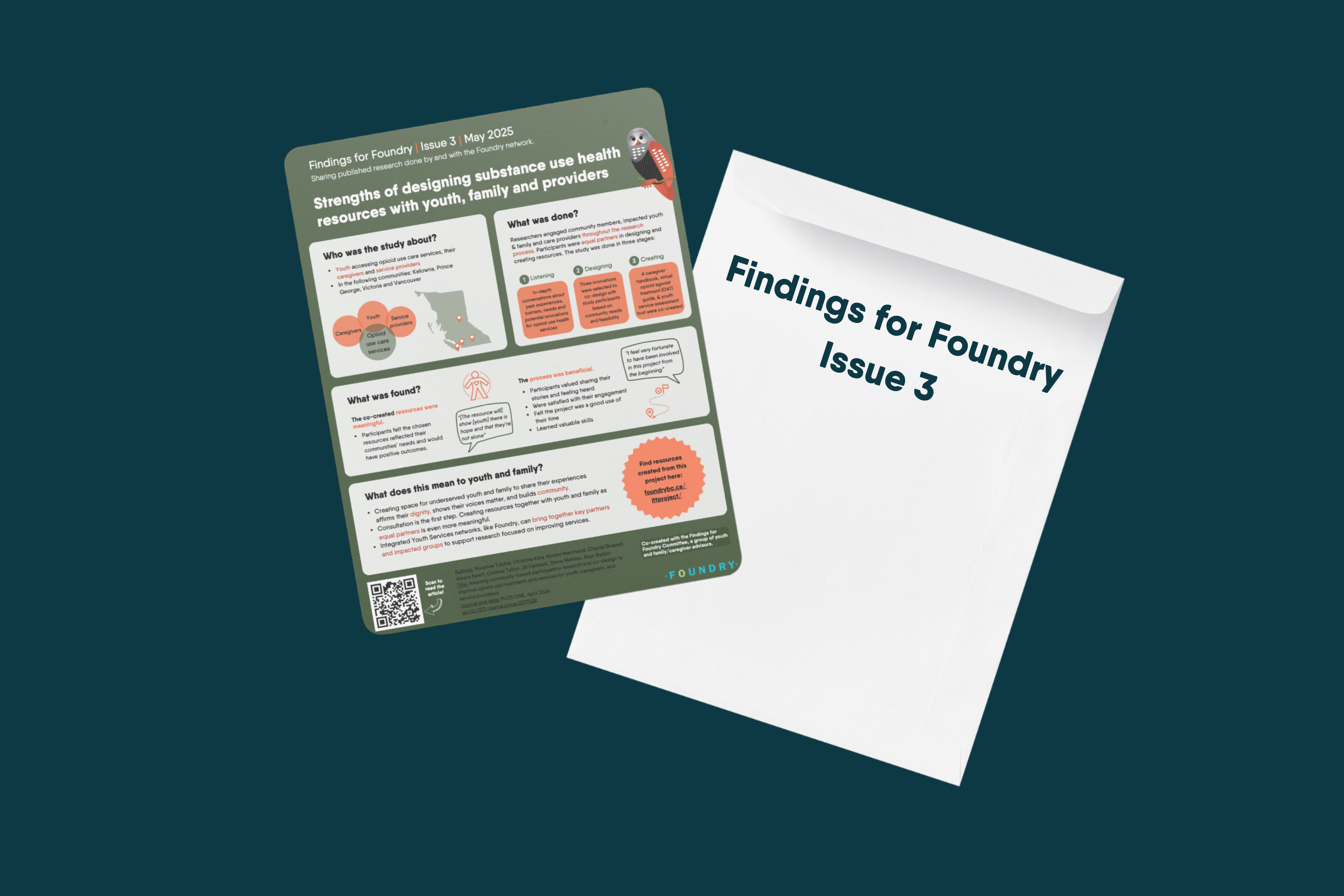
In this issue, youth and family/caregivers explored a study by Turuba et al. (2024) titled Strengths of partnering with youth, family and providers to design opioid use services. The study focused on the importance of using community-based participatory research (CBPR) and co-design strategies.
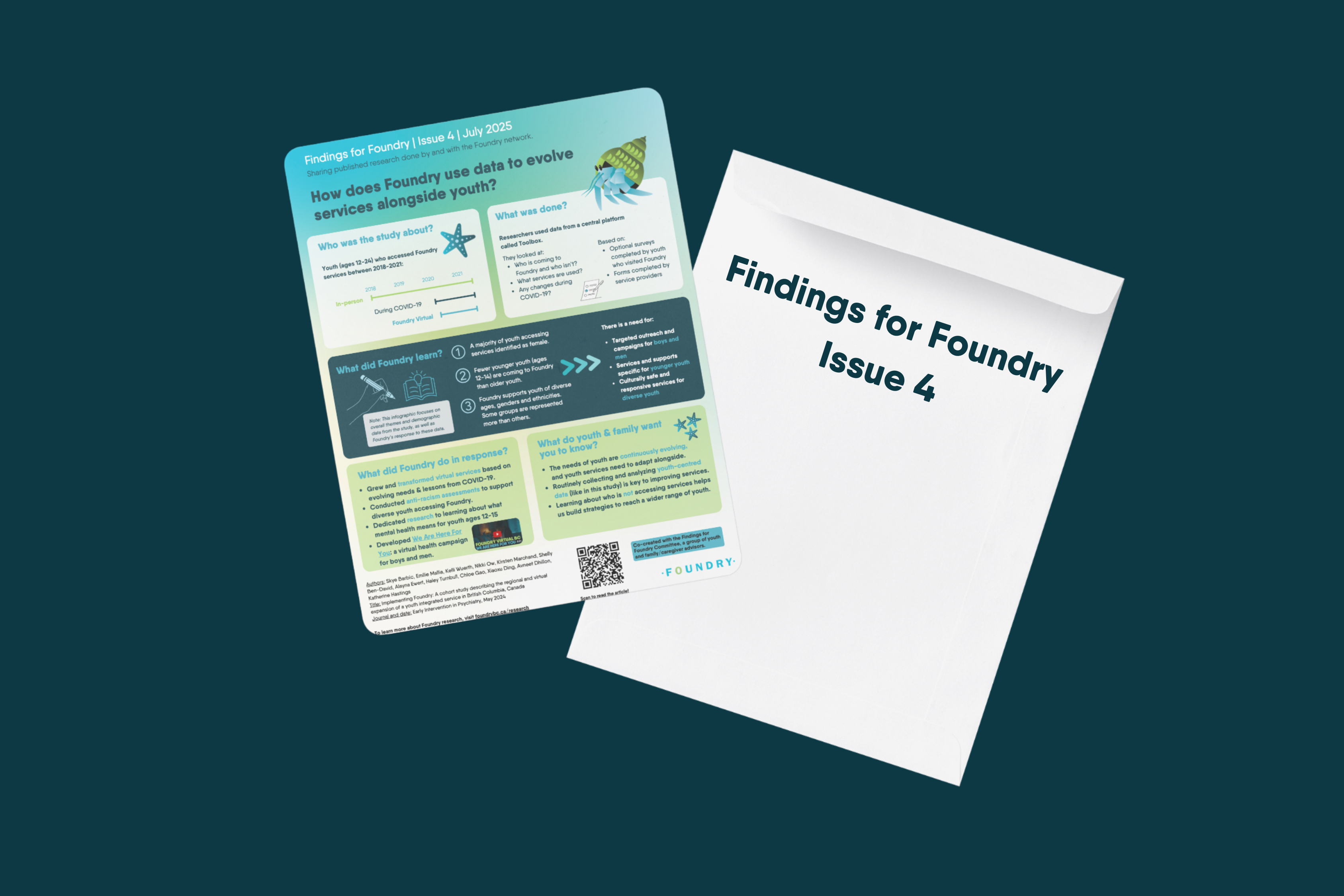
In this issue, youth and family/caregivers explored a study by Foundry Senior Scientist Skye Barbic and colleagues. The study used data from Toolbox to learn about youth who accessed Foundry. The infographic focuses on what Foundry learned from the overall themes and demographic data, and how Foundry responded.
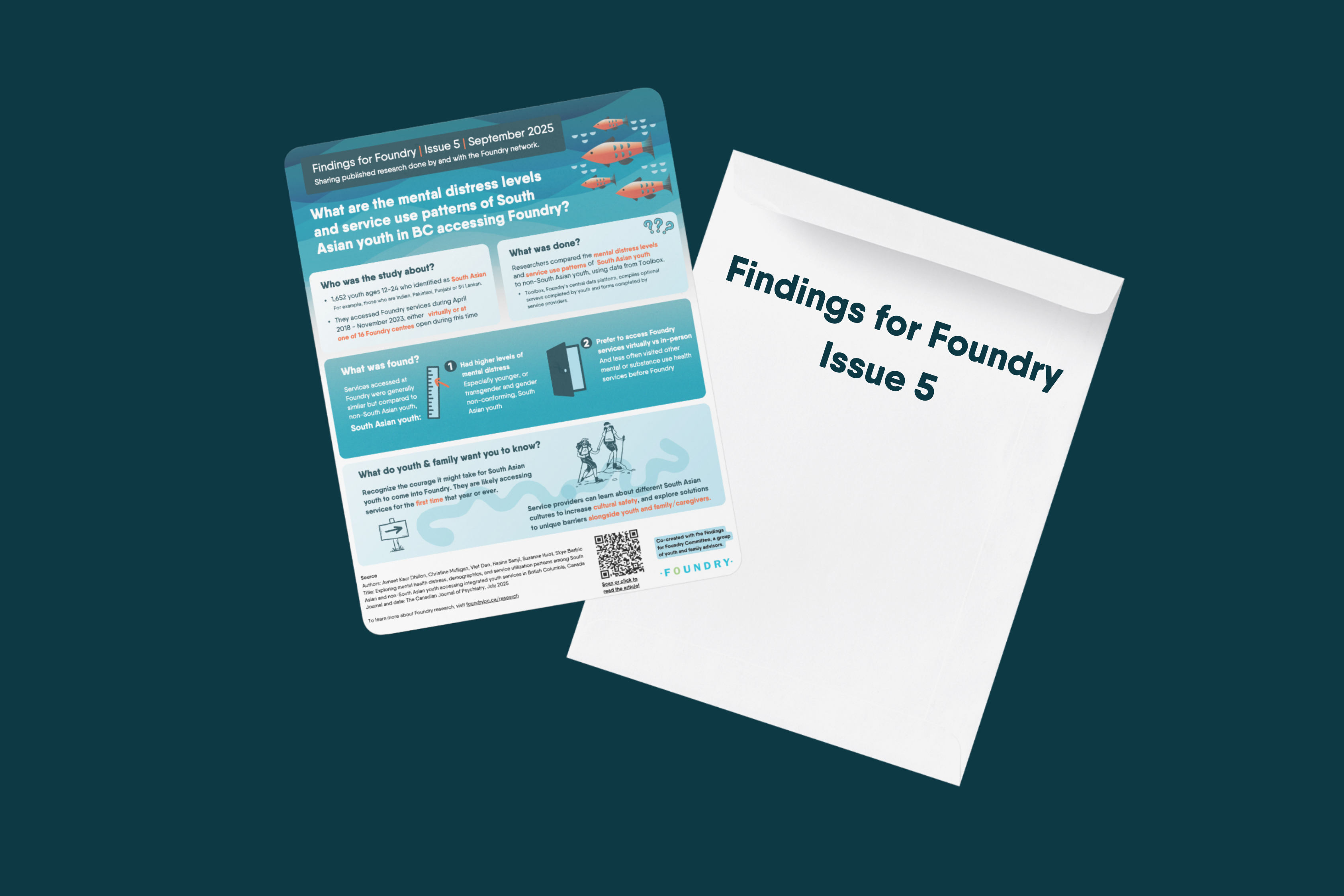
This issue highlighted a study by UBC PhD student Avneet Dhillon, who works alongside Foundry’s Head Scientist, Skye Barbic. The study explored the mental health distress levels and service use patterns of South Asian youth accessing Foundry, compared to non-South Asian youth.
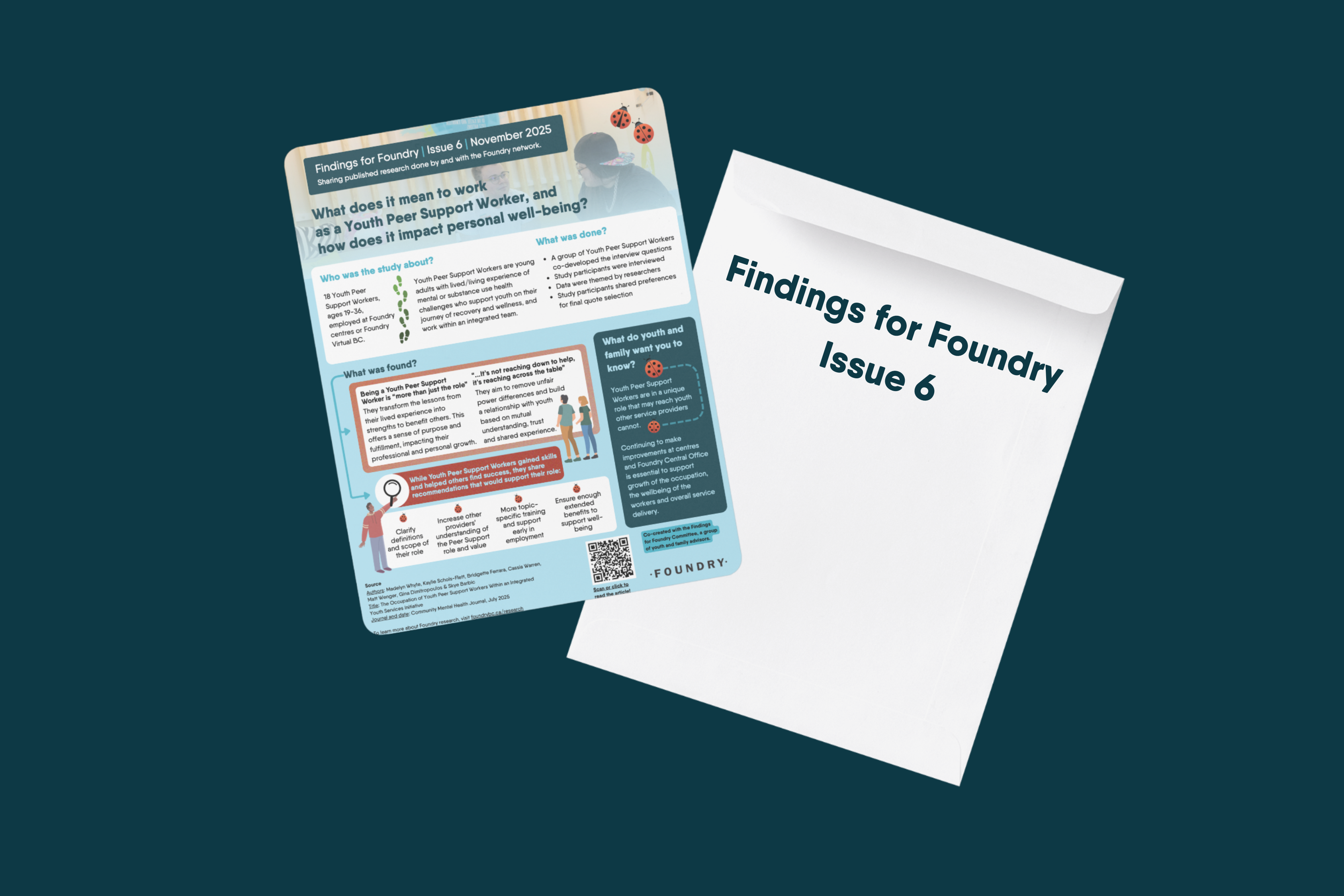
This issue shared a study by UBC researcher Madelyn Whyte, who works alongside Foundry’s Head Scientist, Skye Barbic. The study explored what it means to work as a youth peer support worker at Foundry, the impacts on their well-being and recommendations that would support the role.
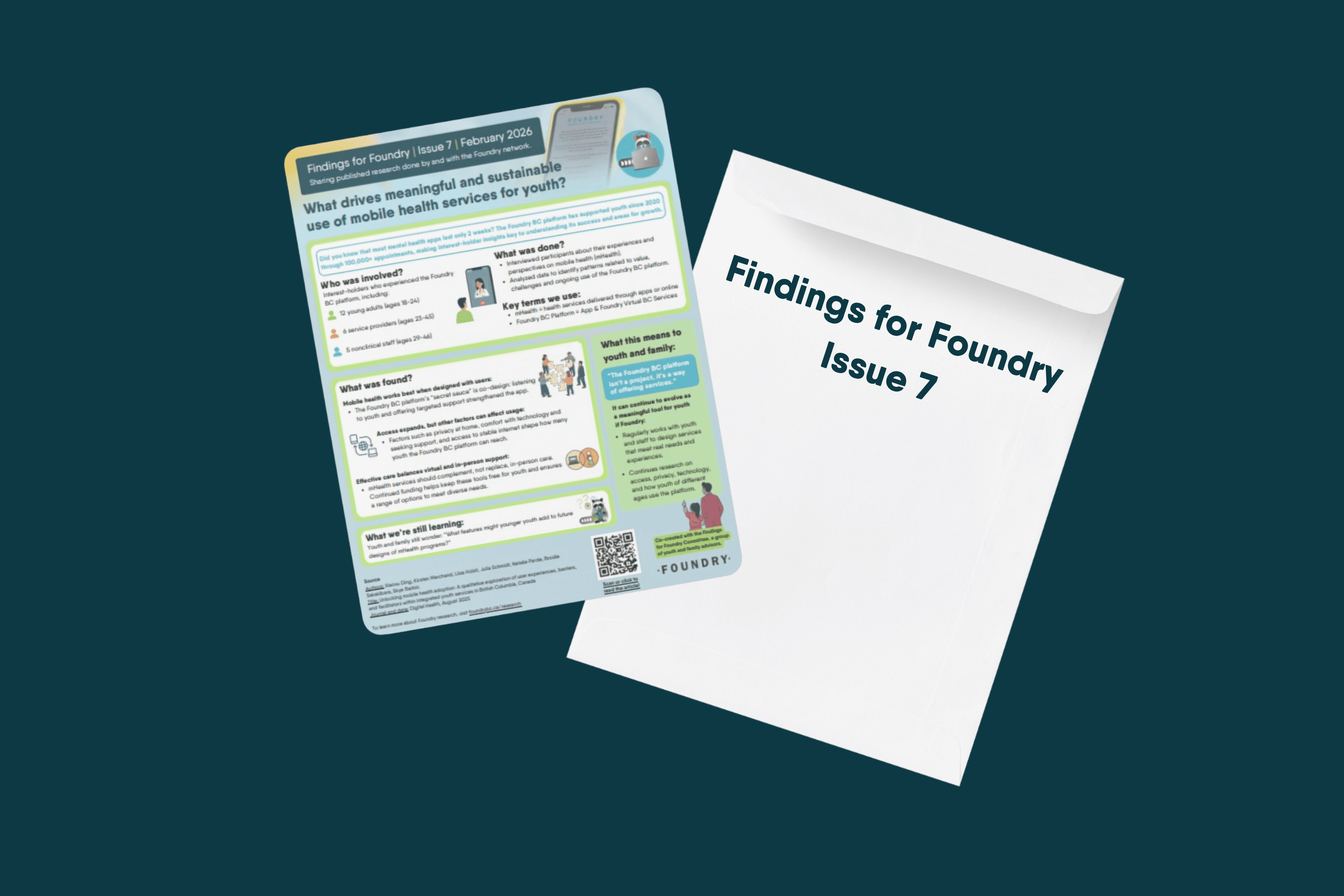
This issue shared the findings of a study by UBC PhD student Xiaoxu Ding, who worked alongside Foundry’s Head Scientist, Skye Barbic. The study explored how youth, service providers, and nonclinical staff experience and make sense of Foundry BC’s mHealth services, and what shapes their successful long‑term use.
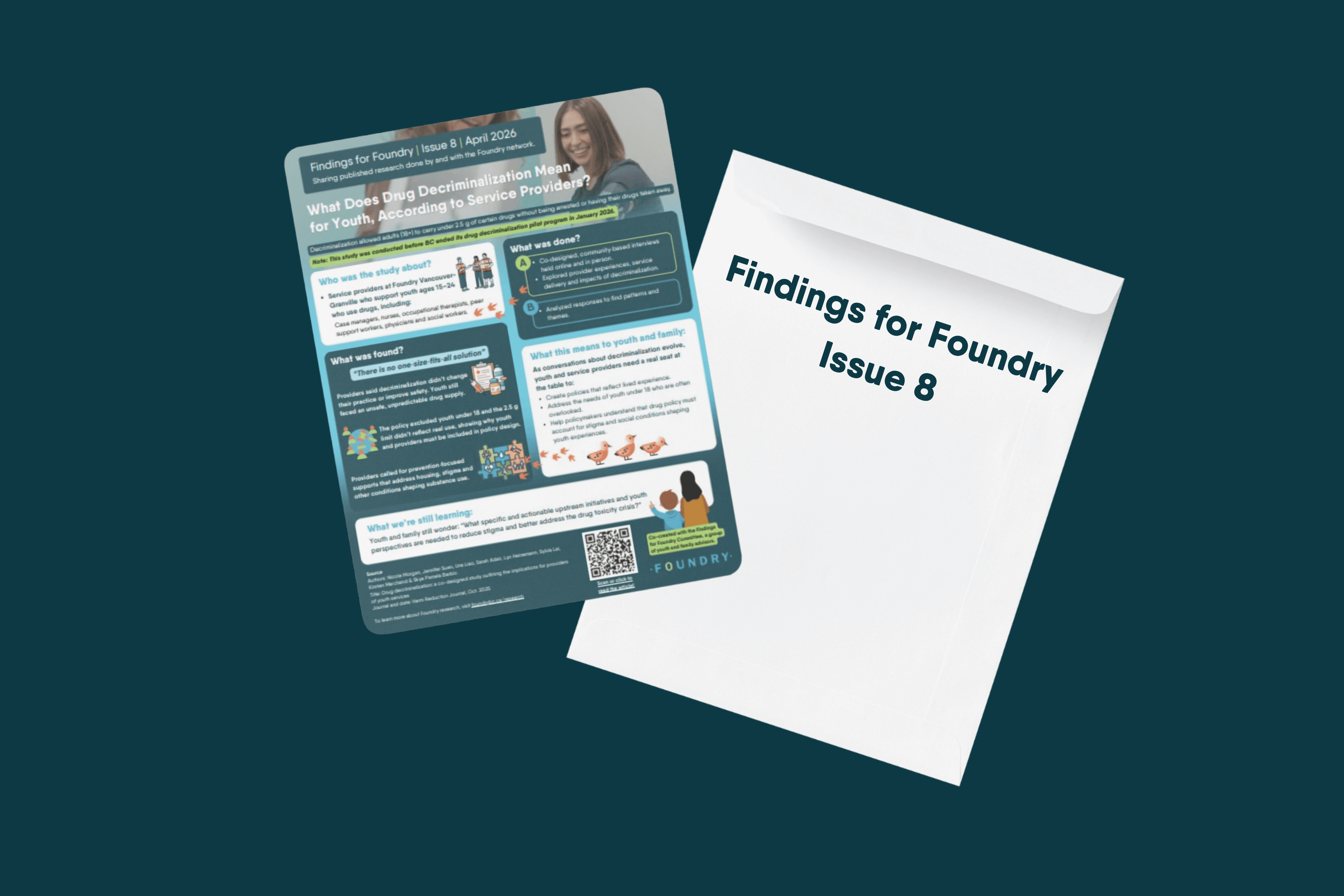
This issue extracted the findings of a study led by graduate students Nicole Morgan, Jennifer Suen, and Una Liao, alongside Foundry authors Sarah Adair, Lyn Heinemann, Sylvia Lai, Kirsten Marchand, and Skye Barbic. The study explored how service providers understood and experienced BC’s drug decriminalization policy, including their attitudes and beliefs about decriminalization and the knowledge and resources they felt they needed to discuss it effectively with youth.
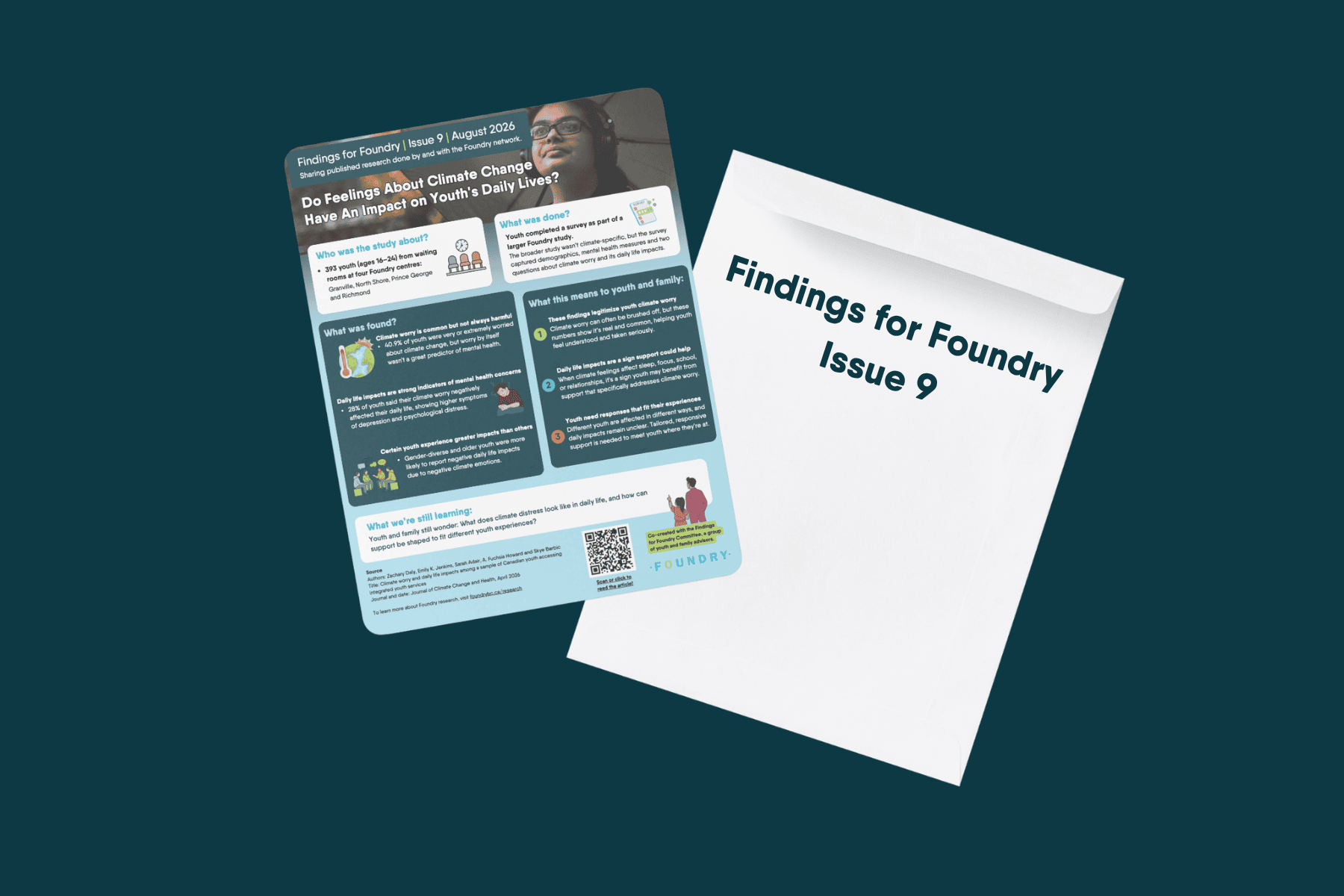
This issue shared findings from a study by Zachary Daly, Emily K. Jenkins, Sarah Adair, A. Fuchsia Howard, and Skye Barbic. The study explored climate worry among youth accessing Foundry services, including how feelings about climate change affect their daily lives and mental health, and how these experiences can differ among youth.